
 What do golden orb spiders have to do with you 600 Andrews graduates this weekend? This past fall a shining piece of yellow-gold textile (11 ft x 4 ft) went on display in the American Museum of Natural History in New York City. Woven from the silk of more than a million wild female golden orb spiders, this rare cloth is a four year collaboration of seventy people searching telephone poles in Madagascar to collect the spiders (which bite), with another twelve workers gingerly extracting the silk filament from each of the arachnids (about 80 feet per spider). Weaving the 96-filament threads together resulted in “the only large piece of cloth made from natural spider silk existing in the world today.” (http://www.wired.com/wiredscience/2009/09/spider-silk/)
Why the fascination with spider silk? Because it’s “stronger than steel or Kevlar but far more flexible, stretching up to 40 percent of its normal length without breaking.” If science could mass produce spider silk, we could have fabric for biomedical scaffolds or perhaps an alternative to Kevlar armor. But so far we haven’t been able to replicate the spider’s stunning production that begins as liquid protein in a small gland in her abdomen. When she subsequently applies physical force to that liquid, she actually rearranges the protein’s molecular structure and turns it into solid silk, “stronger than steel!”
What’s all this have to do with you graduates today? Let me get a bit more personal now, since one of you is named Dwight Kirkpatrick Nelson (which means his mother and I are as excited as your parents over the incredible achievement that we’re celebrating together). For four years you’ve been the recipient of the “liquid protein” of a Seventh-day Adventist education. Semester after semester of information, knowledge, wisdom, experiment and experience have been poured into your bright minds. And tomorrow you receive the well-deserved accolades and recognition of your academic feat.
But as the golden orb spider reminds us, having reserves filled with liquid protein is one thing—producing shiny golden silk quite another. Which is why, like the spider, it will take the collusion of forces within you and around you—forces spiritual, social, intellectual and even physical—to weave a unique new silken tapestry out of your life—one you were destined for from the beginning. Choose the companionship of the God who has loved you from the day of your birth and guided you to this day of such accomplishment, and you can be certain your life tapestry and story will be woven with silk “stronger than steel.”
And so on behalf of your parents, who love you dearly and are very proud of you—and your professors and your campus pastors—let me send you into the uncharted adventure ahead with this unfailing promise: “There has never been the slightest doubt in my mind that the God who started this great work in you would keep at it and bring it to a flourishing finish on the very day Christ Jesus appears” (Philippians 1:6 Message).
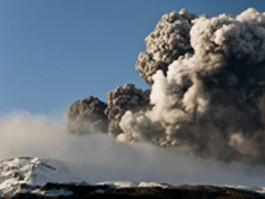
 It isn’t pretty when Mother Nature blows her stack! For over a week now the economy of our little planet has been held hostage by an angry volcano fuming above the frigid plains of Iceland. They call her Eyjafjallajoekull (meaning “island mountain glacier”), and the good news is she hasn’t put on a display like this since 1821. The bad news is that back then she threw her tantrums for thirteen long months!
 Here’s an Earth Day idea for you. Paul Hawkens in his “green” book, Blessed Unrest, tells of an old rabbinical teaching that if we hear that the world is ending and the Messiah is coming, we must first plant a tree and then go and determine if the story is true or not. For Seventh-day Adventists, who champion God’s creation memorial and who celebrate the return of the Creator, planting a tree isn’t such a bad idea, is it?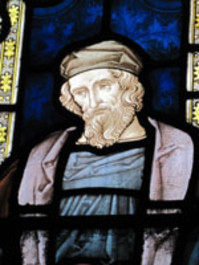
 Why wouldn’t a preacher want to visit there? We just returned from spending the Easter weekend in Birmingham, England—preaching at a conference for a group of highly motivated young adults, AdvANCE (Adventist Apologetics Networking Conference on Evangelism). And I was blessed. Not only because of their passion to communicate the everlasting gospel to their extremely secular homeland (one European survey ranked the United Kingdom as the most “godless” nation in Europe). But also because just a few miles up the motorway is the English town of Lutterworth, the final parish of the great 14th century English preacher scholar, John Wycliffe. In that stone and brick sanctuary stands the pulpit containing wooden pieces from the very one Wycliffe thundered from during his pastorate (1374 to 1384). Behind glass are the fragments of the robe this great preacher once wore. And on the platform beside the altar is the still crimson-padded chair he once used.
 They found the door to heaven this week! A gentleman named User served as the chief minister to the powerful and long-ruling Queen Hatshepsut of Egypt (15th century BC). In fact for twenty years he was “vizier” (an Egyptian civil officer having viceregal powers) in her palace. Along the way he also acquired the titles of prince and mayor of the city. So while he wasn’t royalty, he hobnobbed with them. In life, and even in death. For archaeologists have found his tomb on the west bank of the Nile at Luxor, the burial ground reserved for kings and queens. User had connections.
 Have you read the 2300 pages of the newly passed health care bill? I haven't either. But as one report summarized the Patient Protection and Affordable Care Act that the president signed this week, it is "the most sweeping expansion of government social policy in more than 40 years, and perhaps the most polarizing." Regardless of your personal convictions about the new health care law, most all of us are agreed that its protracted debate certainly did not bring out the best in civil discourse, did it? And I wonder if all of this is a harbinger of days to come, the grinding gridlock of political process and national governance that in a time of economic (or any other) crisis could unexpectedly veer this nation down a pathway long predicted but hardly anticipated. But never mind that notion right now.
 At what point does a thinking person become concerned with nuclear proliferation in the Middle East? This Tuesday both Israel and Syria announced their intentions to produce atomic power plants, ostensibly for peaceful energy-generating purposes in their nations. And of course the world has been warily keeping an eye on Iran as it proceeds with its own nuclear power program. And now word on the street is that Egypt, Jordan and United Arab Emirates are also eager to develop their own nuclear power. And who’s to blame any of them? After all, nuclear fission is environmentally cleaner than coal-burning, avoiding the belching of fossil fuels into our atmosphere, thus theoretically reducing global warming and its effects. The small matter of nuclear waste storage, of course, is a perplexing down-side to atomic power. But viva nuclear fission—and a brave new world precariously balanced on the edge between peaceful energy and nuclear weaponry.
 In the space of one and a half months, our hemisphere has suffered two immense killer quakes—the 7.0 magnitude quake that leveled Port-au-Prince, Haiti, January 12, and left 230,000 dead and an entire country in economic ruin; and the magnitude 8.8 monster that ravaged Chile last Sabbath morning, unleashing destructive tsunamis in its wake (one eyewitness reported a wall of water “fifty feet” high). While the Chilean death toll was a small fraction of that in Haiti (because of enforced earthquake construction codes), the energy released by the Chilean quake was so immense scientists are now telling us it knocked our planet 3 inches off its axis, thus shortening our day by 1.26 microseconds. Our hearts and our prayers (and our financial gifts—go to
 Why are the “talking heads” so glum? Thomas Friedman, in his Sunday column in the New York Times, reported that because of the economic downturn the residents of Tracy, California, are now going to be charged to use their emergency 911 service. You can pay $48 a year to cover unlimited 911 calling, or you can wait and be billed $300 for every time you have an emergency. “Welcome to the lean years,” Friedman opined. For the past seventy years Americans have lived off the fat of the land. Our parents may have been the Greatest Generation, but we have become the Grasshopper Generation, Friedman observed, “eating through the prosperity that was bequeathed us like hungry locusts.” But after the feast comes the famine. “Let’s just hope our lean years will only number seven,” referring to the Genesis story of the crippling Egyptian famine.