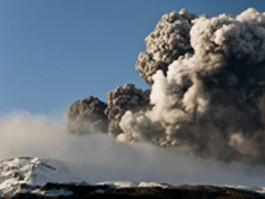
 It isn’t pretty when Mother Nature blows her stack! For over a week now the economy of our little planet has been held hostage by an angry volcano fuming above the frigid plains of Iceland. They call her Eyjafjallajoekull (meaning “island mountain glacier”), and the good news is she hasn’t put on a display like this since 1821. The bad news is that back then she threw her tantrums for thirteen long months!
But there was no air travel back then. While flights have now been “ungrounded” in Europe, the airline industry has calculated that air carriers lost $1.7 billion as a consequence of their decision to keep their passengers and planes out of the wind-blown ash clouds. But that “better to be safe than sorry” precaution came with a very heavy price tag. Without auto parts shipments, BMW and Nissan auto plants in Germany and Japan were forced to close temporarily. Flower growers in Kenya—which exports to the world 1,000 tons a day of fresh goods—threw away 10 million flowers, mostly roses, with refrigerated storages overflowing. Asparagus and broccoli ended up, not on European tables, but as cattle feed instead. Tourism in Europe dropped. Train travel skyrocketed. Oil prices fell. And then the mountain went still. Almost.
But if she should resume belching her black plumes into the heavens for a prolonged period, Reuters reported that some economists estimate the European GDP could be lowered between 1 and 2 percent. Amazing, isn’t it, how a faraway island volcano can impact an entire globe?
Just another cycle . . . or just another reminder? After all, you could hardly expect Mother Nature to keep still as this civilization approaches the day of reckoning, could you? Seismologists in Southern California “cannot fully explain” why already this year that region has experienced 70 quakes greater than 4.0 magnitude, when there were only 30 in all of 2009 and 29 in 2008.What’s going on? No—who’s coming back?
The confidence implied in that second question is captured in the hymn of the psalmist: “God is our harbour and our strength, a very present help in trouble. For this cause we will have no fear, even though the earth is changed, and though the mountains are moved in the heart of the sea; though its waters are sounding and troubled, and though the mountains are shaking with their violent motion” (Psalm 46:1-3 BBE). Mountains shaking with violent motion in the heart of the sea—sounds like Iceland’s “Island-mountain-glacier,” doesn’t it? But never mind: “The LORD of hosts [the angel armies] is with us; the God of Jacob is our refuge” (v 7 NKJV).
Great news for the students of this university who end another academic cycle. Graduate or returnee, the promise is that “the Lord of Hosts” or “the King of Angels” is with you. And who better to be with you, when nature trembles, the economy tumbles? Who better to open a closed job market than the God whose angel still guards and guides you? No wonder Psalm 46 can be your hymn, too. “For this cause we will have no fear.”

 Here’s an Earth Day idea for you. Paul Hawkens in his “green” book, Blessed Unrest, tells of an old rabbinical teaching that if we hear that the world is ending and the Messiah is coming, we must first plant a tree and then go and determine if the story is true or not. For Seventh-day Adventists, who champion God’s creation memorial and who celebrate the return of the Creator, planting a tree isn’t such a bad idea, is it?
 Why wouldn’t a preacher want to visit there? We just returned from spending the Easter weekend in Birmingham, England—preaching at a conference for a group of highly motivated young adults, AdvANCE (Adventist Apologetics Networking Conference on Evangelism). And I was blessed. Not only because of their passion to communicate the everlasting gospel to their extremely secular homeland (one European survey ranked the United Kingdom as the most “godless” nation in Europe). But also because just a few miles up the motorway is the English town of Lutterworth, the final parish of the great 14th century English preacher scholar, John Wycliffe. In that stone and brick sanctuary stands the pulpit containing wooden pieces from the very one Wycliffe thundered from during his pastorate (1374 to 1384). Behind glass are the fragments of the robe this great preacher once wore. And on the platform beside the altar is the still crimson-padded chair he once used.
 They found the door to heaven this week! A gentleman named User served as the chief minister to the powerful and long-ruling Queen Hatshepsut of Egypt (15th century BC). In fact for twenty years he was “vizier” (an Egyptian civil officer having viceregal powers) in her palace. Along the way he also acquired the titles of prince and mayor of the city. So while he wasn’t royalty, he hobnobbed with them. In life, and even in death. For archaeologists have found his tomb on the west bank of the Nile at Luxor, the burial ground reserved for kings and queens. User had connections.
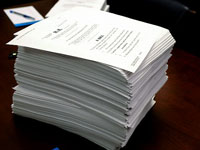 Have you read the 2300 pages of the newly passed health care bill? I haven't either. But as one report summarized the Patient Protection and Affordable Care Act that the president signed this week, it is "the most sweeping expansion of government social policy in more than 40 years, and perhaps the most polarizing." Regardless of your personal convictions about the new health care law, most all of us are agreed that its protracted debate certainly did not bring out the best in civil discourse, did it? And I wonder if all of this is a harbinger of days to come, the grinding gridlock of political process and national governance that in a time of economic (or any other) crisis could unexpectedly veer this nation down a pathway long predicted but hardly anticipated. But never mind that notion right now.
 At what point does a thinking person become concerned with nuclear proliferation in the Middle East? This Tuesday both Israel and Syria announced their intentions to produce atomic power plants, ostensibly for peaceful energy-generating purposes in their nations. And of course the world has been warily keeping an eye on Iran as it proceeds with its own nuclear power program. And now word on the street is that Egypt, Jordan and United Arab Emirates are also eager to develop their own nuclear power. And who’s to blame any of them? After all, nuclear fission is environmentally cleaner than coal-burning, avoiding the belching of fossil fuels into our atmosphere, thus theoretically reducing global warming and its effects. The small matter of nuclear waste storage, of course, is a perplexing down-side to atomic power. But viva nuclear fission—and a brave new world precariously balanced on the edge between peaceful energy and nuclear weaponry.
 In the space of one and a half months, our hemisphere has suffered two immense killer quakes—the 7.0 magnitude quake that leveled Port-au-Prince, Haiti, January 12, and left 230,000 dead and an entire country in economic ruin; and the magnitude 8.8 monster that ravaged Chile last Sabbath morning, unleashing destructive tsunamis in its wake (one eyewitness reported a wall of water “fifty feet” high). While the Chilean death toll was a small fraction of that in Haiti (because of enforced earthquake construction codes), the energy released by the Chilean quake was so immense scientists are now telling us it knocked our planet 3 inches off its axis, thus shortening our day by 1.26 microseconds. Our hearts and our prayers (and our financial gifts—go to
 Why are the “talking heads” so glum? Thomas Friedman, in his Sunday column in the New York Times, reported that because of the economic downturn the residents of Tracy, California, are now going to be charged to use their emergency 911 service. You can pay $48 a year to cover unlimited 911 calling, or you can wait and be billed $300 for every time you have an emergency. “Welcome to the lean years,” Friedman opined. For the past seventy years Americans have lived off the fat of the land. Our parents may have been the Greatest Generation, but we have become the Grasshopper Generation, Friedman observed, “eating through the prosperity that was bequeathed us like hungry locusts.” But after the feast comes the famine. “Let’s just hope our lean years will only number seven,” referring to the Genesis story of the crippling Egyptian famine.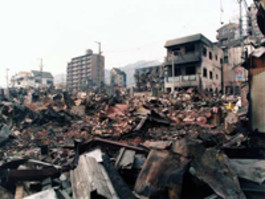
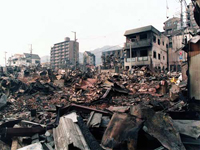 “An estimated 1 million kids orphaned by quake.” That stunning headline is enough to break your heart, isn’t it? Barely two weeks into the Haitian catastrophe, and the unfolding saga keeps peeling back layer after layer of the immense heartache and suffering that our Caribbean neighbors are enduring.