Even if you’re afraid of heights, this is one pinnacle I wish you could stand upon. Many consider it one of the most sacred sites in all of Dark Ages history. Today I’ve invited my young friends from the School of Architecture here at Andrews University to share with you the story of that unforgettable day when together we stood atop the Castelluzzo, that infamous rock tower high above the alpine valleys of northwest Italy and immortalized in John Milton’s sonnet, “On the Late Massacre in Piedmont”:
Avenge, O Lord, thy slaughtered saints, whose bones
Lie scattered on the Alpine mountains cold;
Even them who kept thy truth so pure of old,
When all our fathers worshiped stocks and stones,
Forget not: in thy book record their groans . . . .
But how can one brief moment of worship possibly capture the crimson drama of the Waldenses? And why make their intrepid preservation of the light of Holy Scripture through five hundred long years of spiritual darkness our theme for Alumni Sabbath? After all, the world and Christendom have long forgotten the “Bloody Easter” (April 24, 1655) massacre of those hapless innocents—a crime against humanity so unspeakable that when Sir Oliver Cromwell read the eyewitness accounts of the slaughter, he declared a day of fasting and prayer across England. But why should we care today?
Because in the fulfillment of the Apocalypse’s cryptic words in Revelation 12—the vision tale of a woman fleeing from an ancient Serpent into a barren wilderness and there hidden by God for the long, dark ages of medieval Christianity—in that fulfillment still witnessed to by the silent rocky sentinels of the Piedmonts is the unspoken assurance that the God who has preserved ancient truth through the crimson centuries since Calvary, the same God who raised up this university over a century ago, is the very God who will yet proclaim that very truth to this generation through the remnant seed of that very woman. For that reason their story is ours.
For as surely as Almighty God called upon the men, women and children of those cloistered valleys long ago, he is calling upon the men, women and children of this generation to embrace the missional legacy of the Waldensian people, captured in their Latin motto, Lux lucet in tenebris. “The light shines in darkness.” Indeed it did. And indeed it must. Yet. In your life and mine. Shine into the gathering darkness of a culture and world desperate for even the fragments of the only Light who can yet heal this world he loves.
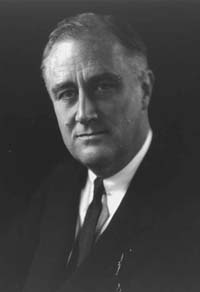 On March 4, 1933, the newly elected president of the United States delivered his inaugural address to the nation. Four sentences into that address, Franklin Roosevelt uttered the words that have lived long beyond his four-term presidency: “So, first of all, let me assert my firm belief that the only thing we have to fear is fear itself—nameless, unreasoning, unjustified terror which paralyzes needed efforts to convert retreat into advance.” So spoke the nation’s leader in that dark hour of economic despair. Because that’s what leaders are raised up to do, is it not? To call the people, the populace, the public to renewed confidence and hope for the journey yet ahead, to remind them of their “rendezvous with destiny.” That’s precisely what an aged leader named Moses did in an ancient book that becomes the grist for our worship journey this new season. Deuteronomy is in fact the farewell address (no doubt the longest farewell address in history!) of that beloved leader to the children of Israel who had literally grown up under the tutelage of his forty year administration. As we handle the document and text of his last will and testament to this community that had exhausted four decades of wandering in the bleached, barren wilderness south of Canaan, we will ponder the notion that in their wanderings lies the tale of our own journey toward the Promised Land. For the apostle firmly asserts: “Now all these things happened to them [in the wilderness] as examples, and they were written for our admonition, upon whom the ends of the ages have come” (I Corinthians 10:11). Have “the ends of the ages” come upon us? And are we prepared for the high calling of that “rendevous with destiny?” What are the lessons of and for “the chosen?” Journey with me this season as we track the sandy footprints of that chosen generation long, long ago. And in Moses’ appeal to remember, may we heed the call of another leader who spoke courage into the uncertainty of a journey that yet remained: “We have nothing to fear for the future, except as we shall forget the way the Lord has led us, and His teaching in our past history” (Life Sketches 196). Nothing to fear, much to remember, and a future to claim. It is the shining hour of “The Chosen.” Shall we not seize it?
 How would you like to teach school in New Orleans? The government is endeavoring to attract new teachers to what, even before Hurricane Katrina, was one of the toughest and most challenging school districts in the nation. But now in the post-traumatic stress of that crippled city, recruiters are offering to every teacher willing to move to the Crescent City a two-year signing bonus of $17,000. Any takers? Fact of the matter is that whether you teach in New Orleans or Benton Harbor or Berrien Springs you’ve signed on to a very demanding profession. U.S. Department of Labor statistics report that there are now 3.8 million preschool through high school teachers (public and private) in the United States, with annual earnings ranging (in the latest statistics available) from $26,730 to $71,370. Any takers now? But sit down with a school teacher, private or public, and inquire the motivation that keeps the teacher returning to that noisy classroom day after day, and I predict you’ll not hear a word about “the compensation package.” And probably not too much about the working environment or physical plant either (which isn’t to suggest that such factors aren’t important or vital to these professionals). But to a man and woman among the teachers I’m privileged to know (and work with) the gut motivation and heart response keep coming down to a personal passion for kids, a love of learning and teaching and the desire to change this world one life at a time. And the rewards? Years ago the screen play “Mr. Holland’s Opus” powerfully portrayed the payoff of a high school music teacher, whose dream to compose a world-class opus was perennially preempted by his devotion to the kids who tromped through his band room year after year. Their surprise rendition of his unfinished opus at his retirement program captured the compelling truth about teachers—their greatest life compositions are played out in the lives of their students long after school days are over. I carry these two quotations in my Bible: “Remember now your Creator in the days of your youth” (Eccl 12:1); and, “What line can we dwell upon that will make the deepest impression upon the human mind? There are our schools” (FE 529). In that juxtaposition is the reason why I thank God for the hundreds of dedicated Christian teaching professionals in this parish. Let the school bells clang—our kids are in the right hands!