It is forecast to be “the biggest human gathering on U.S. soil” in history! And everybody and his brother is headed to the Inauguration (although in our case, my brother’s going and I’m not). Predictions are that between three and five million people will crowd into the heart of the nation’s capital to “watch” as Barak Obama is sworn in as the 44th president of the United States of America on Tuesday, at precisely one minute before noon. And when he is, he will place his right hand upon the gold-trimmed, velvet-bound, metal-rimmed Bible that belonged to what many consider to be America’s greatest president, Abraham Lincoln.
But actually there is no constitutional requirement that a Bible be used for the presidential oath of office. All the Constitution stipulates is that presidents-elect take the oath of office at noon on January 20, and that they repeat the 35-word oath. George Washington chose a Bible, added the words “so help me God,” and kissed the Bible at the end of his oath. Theodore Roosevelt was the only president sworn in without a Bible. And John F. Kennedy, the first Catholic president, was sworn in on a Catholic Douay Bible. (http://www.scrippsnews.com/node/39923)
Why the Bible? According to religion scholar Julie Ingersoll the use of the Bible is a “symbolic shout out to the role religion plays in the presidency and implies the actual source of a president’s power.” She observed, "It's establishing the notion that authority comes from God.” (http://www.jacksonville.com/lifestyles/values_and_religion/2009-01-13/story . . .) The Apostle Paul would not disagree. “Let everyone be subject to the governing authorities, for there is no authority except that which God has established. The authorities that exist have been established by God” (Romans 13:1 TNIV).
And so if ever the individual occupying the office of the presidential governing authority of this nation needed divine guidance and providential wisdom, it surely would be now. The governmental, economic and social challenges that face our incoming president are gigantic and daunting—both nationally and globally. And while Seventh-day Adventist Christians are unequivocal in their passionate defense of the separation of church and state, it is neither antithetical to that stance nor counterproductive to our traditional disengagement from political alliances for us to be at the forefront of our communities in praying and interceding before God on behalf of our president. “I urge, then, that petitions, prayers, intercession and thanksgiving be made for everyone—for kings and all those in authority, that we may live peaceful and quiet lives in all godliness and holiness” (I Timothy 2:1, 2).
On behalf of President Obama and his wife Michelle and their two young daughters, Malia and Sasha, let us then join our hearts in prayer, seeking for all four of them the watchful protection of God, interceding for husband and father and president a special measure of divine wisdom for the journey now fraught with such grave consequences. And let us lift our voices to the Supreme Leader of all, that a “mighty door of opportunity” might yet be held open a little longer, so that the passionate and final appeal of God to this civilization might go forth unimpeded before the return of Christ our Lord. Amen.
 Can a picture of death grace the cover of anything? The latest Newsweek magazine (January 12, 2009) ran two two-page spreads back to back before the title page of its cover story on the war between Israel and the Hamas. Both spreads are pictures of death. Both innocent victims. In the first you gaze down as a worker gently lowers the body of four-year-old Lama Hardan, who’d been taking out the trash beside her home in Gaza “when an Israeli air raid struck.” Little Lama is wrapped in a yellow shroud up to her neck, her dark curly hair and peaceful, slumbering face belying the tragedy. In the second two-page spread mourners are gathered around a body shrouded by the flag of Israel. Irit Sheetrit, 39, from Ashdod was with her sister “driving home from the gym when a Hamas rocket hit.” Bent over her body is a sobbing man with tissue clutched in hand. Two portraits of death—and both can break your heart. Because whether you’re four-years-old or thirty-nine or 85 . . . it doesn’t matter, does it? Death is the cold, heart-breaking reality every inhabitant of this planet must live with 24/7—victim or survivor. Obviously, you and I are still survivors. But our day will come, too. Only there will be no two-page spread announcing our demise. The fact is we live in a culture mesmerized by death. But movie plots, talking heads, late night comedians and MTV singers notwithstanding, nobody stares at our common mortal enemy long enough to find an answer. What happens when a child or a woman or a man dies? What does death feel like? Where does death lead? How can I live, how can I die without fearing death? Every religion on earth has struggled for the answers, but stunningly nearly every one of them has stumbled short of the truth. But the truth can be discovered. That’s why I’d like to invite you to join me in a frank and candid, but hopefully hope-filled exploration (expose, perhaps, is too strong a word) of death. Right here at this website. For the next few weeks. Click on to a new twin miniseries, “The Truth about Death” and then “The Truth about Hell.” Please tell your friends about the podcasts, email the link to those who need to know. Because without the truth, fear is our default. And nothing buries hope faster than fear. Just ask the God who’s had to live and die himself.
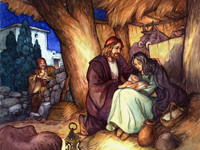 They’ll go down as the most watched and talked about flying shoes in history! And from them we learn a lesson about Christmas. By now you’ve seen the replays a hundred times—that press conference moment in Baghdad Sunday with President Bush and Prime Minister al-Malaki standing side by side at the podium. The president had just begun his opening statement, when a 28-year-old Iraqi TV reporter, Muntadhar al-Zeidi, jumped to his feet and exploded with some unsavory shouting, as one by one he hurled his shoes at the president. Bush instinctively and remarkably ducked both flying shoes, before security guards pounced on the reporter and hauled him away. Why the shoes? You may remember that in the culture of the Middle East nothing is more derogatory or demeaning than to strike an individual with your shoe. For the shoe is considered a symbol of the lowliest and the lowest. When crowds gathered around Saddam Hussein’s toppled statue and struck it repeatedly with their shoes, their point was obvious. What could be more disdaining and lowlier? And in the same region when on that starry, starry night the God of the universe squeezed out of a teenage womb and entered our race, his welcome was the equivalent of a hurled shoe—for what could be lowlier or more demeaning than to offer the Divine One a malodorous backyard cave for his birthplace? Scum of the ground, refuse of the earth—any other leader than God would have been highly affronted. To that room full of reporters President Bush joked away the size 10 shoes that flew past his head. There were no reporters, however, when the Eternal squalled from his make-shift manger cradle. Just a travel worn peasant couple and some brute beasts. They say, “if the shoe fits, wear it.” And he did, the God born in Bethlehem. For on the eve of his death, he returned to his primordial roots, as one by one he removed his followers’ dirty shoes and bathed their soiled and smelly feet. No reporters were there either. Just the wide-eyed and smitten disciples who in muted shame watched the most powerful and humble God in the universe become the lowest and the lowliest. Again. “He made himself nothing, by taking the very nature of a servant, being made in human likeness” (Philippians 2:7 TNIV). “‘Herein is love.’ Wonder, O heavens! and be astonished, O earth!” (Desire of Ages 49). Dallas Willard is right: “When we see Jesus as he is, we must turn away or else shamelessly adore him” (The Divine Conspiracy 19). “O come, let us adore him!”
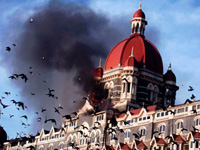 In this season of “peace on earth,” you wouldn’t think so—shopping at Wal Mart or living in Mumbai. In one of those strange twists of coincidence both stories ran over “Black Friday” last weekend (that notorious day-after-Thanksgiving shopping nightmare). At the Wal Mart on Long Island frenzied Christmas shoppers broke down the door and trampled a Wal Mart employee to death as they rushed in to purchase their list-topping gifts for loved ones—nevermind that nobody stopped to love the one who was on the ground fighting for his last breath. Nobody stopped to help either. So much for capitalism’s ballyhooed evolution toward economic freedom and sanity, both of which were stunningly absent amongst those early morning shoppers last week. Also playing non-stop on the same 24-hour cable news outlets, of course, was the tragedy of Mumbai (the picturesque Bombay I have twice visited). And while the kinship between India and America has forged new empathies, the somber reality is that terrorism has now become such a planetary staple no surprise remains the world-over for its latest visitations. Two thousand years ago above a benighted Bethlehem field, that angelic Christmas choir proclaimed in surround-sound glory the hope of the Newborn in yonder manger: “‘Glory to God in the highest heaven, and on earth peace among those whom he favors’” (Luke 2:14 NRSV). Surely the “God in the highest heaven” favors his earth children, doesn’t he? Then what will it take for that “peace on earth” to become more than a prayer on earth? Perhaps it will take the quiet choice not to live out the Wal Mart Christmas frenzy that lurks in us all. Perhaps with an economy tanking faster than the headlines, this is the Christmas we can choose not to reward our credit card companies with the usual pro forma and obligatory gift exchanges. What would happen if this year we chose instead to give the gift of “peace on earth”—and volunteer our services at a soup kitchen, or donate last year’s hardly used Christmas gifts to the Goodwill center nearby, or invite a lonely or needy family home for dinner, or make private peace overtures to one we’ve kept on our “enemies list,” or seek to forge a new year friendship with someone of another faith or no faith at all? (Still not sure? Then check out
 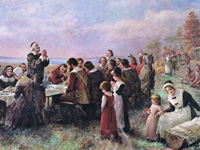 Nathaniel Philbrick, in Mayflower, his acclaimed history of the Pilgrims, recounts how William Bradford, the intrepid leader of that courageous band of Puritans, years later described “that first morning in America.” Recalling with wonder their landing on the salty, windswept shores of Cape Cod Bay on November 15, 1620, Bradford wrote: “But here I cannot stay and make a pause and stand half amazed at this poor people’s present condition. . . . [T]hey had now no friends to welcome them nor inns to entertain or refresh their weatherbeaten bodies; no houses or much less towns to repair to, to seek for succor. What could sustain them but the spirit of God and His Grace? May not and ought not the children of these fathers rightly say: ‘Our fathers were Englishmen which came over this great ocean, and were ready to perish in this wilderness; but they cried unto the Lord, and He heard their voice and looked on their adversity’” (46). His words are appropriate, not only because we celebrate the nearly four century tradition of the Pilgrims’ thanksgiving this week. But in Bradford’s description—“they cried unto the Lord, and He heard their voice and looked on their adversity”—perhaps we also hear the faint hint of a day of adversity yet coming upon this land of the Pilgrims. Could the breath-taking speed with which this nation’s hourly economic headlines are unfolding or unraveling these last few weeks be a portent of what is yet to come? Could this land of the free have already seen her best days? Scribbled on the page of Revelation 13 in my Bible are these words written a century ago: “The Lord has done more for the United States than for any other country upon which the sun shines” (Ms 17, 1906). Hardly a prideful claim of superiority or grounds for national arrogance, this quiet observation simply declares a common truth that this country has enjoyed the uncommon blessings of Providence. And in the sunlight how easy is the spirit of thanksgiving. But should the days turn dark and the supernal blessings wither away, what shall we be grateful for then? A year after their landing, the Pilgrims gathered for that first thanksgiving—half of their band already buried beneath the Massachusetts sod. Yet they gave thanks to God. And so must we. No matter the uncertain voyage that spreads before us, nationally or personally. The Almighty is still that. And in the darkest storm his mercy will yet triumph. Just look at Calvary. “Oh, give thanks to the LORD, for He is good! For his mercy endures forever” (Psalm 136:1).
 What’s a Michigan Thanksgiving? Just ask the chief executives of the Big Three auto makers, who with hat in hand this week begged Congress for $25 billion of bailout loans. While it’s hard to sympathize with 8-figure compensated corporate executives, the plight of 175,000 Michigan auto industry workers is concerning. If GM, Ford or Chrysler were to go bankrupt, siren voices are predicting “a nuclear winter” and “an economic tsunami” for our home state. Who knows? A chart in the South Bend Tribune on Wednesday shows a cluster of 29 auto industry facilities right here in Berrien County that would be affected. Michigan already owns the dubious distinction of leading the nation for two years in unemployment, and we are among the top ten states for home foreclosures. For what then shall we be grateful this season of thanksgiving? “I complained I had no shoes, until I met a man who had no feet.” Even in this season of troubling economic downturn, our lists of reasons to be thankful are indeed still long, are they not? No wonder the apostle, whose meager life belongings consisted of a change of clothing, a walking staff and a pair of sandals, could pen the admonition: “In everything give thanks, for this is the will of God in Christ Jesus for you” (I Thessalonians 5:13). “In everything”? In everything. For apparently there is no downturn that God cannot upturn for the good of his friends (see Romans 8:28). Which is why a grateful soul is such a contagious witness. For God. In Michigan. And to the ends of the earth.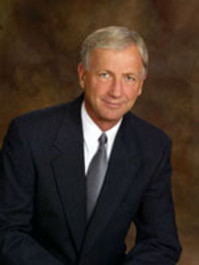
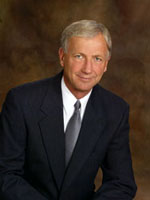 We have lost a gifted leader and a dear friend. The death of Jere Patzer, 61, president of the Seventh-day Adventist Church in the Pacific Northwest, is not only the death of a personal friend—I’ve known Jere for thirty years since ministry days together in Oregon. But it is also the loss of an uncommonly gifted church administrator in our community of faith. Jere’s passion for God and his church, his energetic vision and buoyant leadership style, his personal commitment to mission lived out in his own evangelistic preaching on nearly every continent (all the while serving as an administrator), his loving devotion to family (his wife Sue and sons Darin and Troy and daughter Carissa and their four young grandchildren) and friends—it isn’t hyperbole to recognize that men like Jere are a rare gift. And I shall miss him.