Speaker

Dwight K. Nelson

Dwight Nelson served as lead pastor of the Pioneer Memorial Church on the campus of Andrews University from 1983 to 2023. During his time at Pioneer he spoke on the “New Perceptions” telecast, taught at the theological seminary and has written books, including The Chosen. He and his wife, Karen, are blessed with two married children and 2 granddaughters.

Offering

Saturday, December 17, 2016
Program: 
As We Begin
Sing We Now of Christmas • Wayne Wold Glory to God (from Messiah) • George Frideric Handel
Praise
Joy to the World (Our God Saves) • O Come All Ye Faithful • Away in a Manger
Prayer
Sharon Terrell
Tithes & Offerings
Pastoral Symphony (from Messiah) • George Frideric Handel
Children's Story
Bible Reading
Luke 9:57-58, 61-62 NIV
Worship in Music
Hallelujah (from Messiah) • George Frideric Handel
Sermon
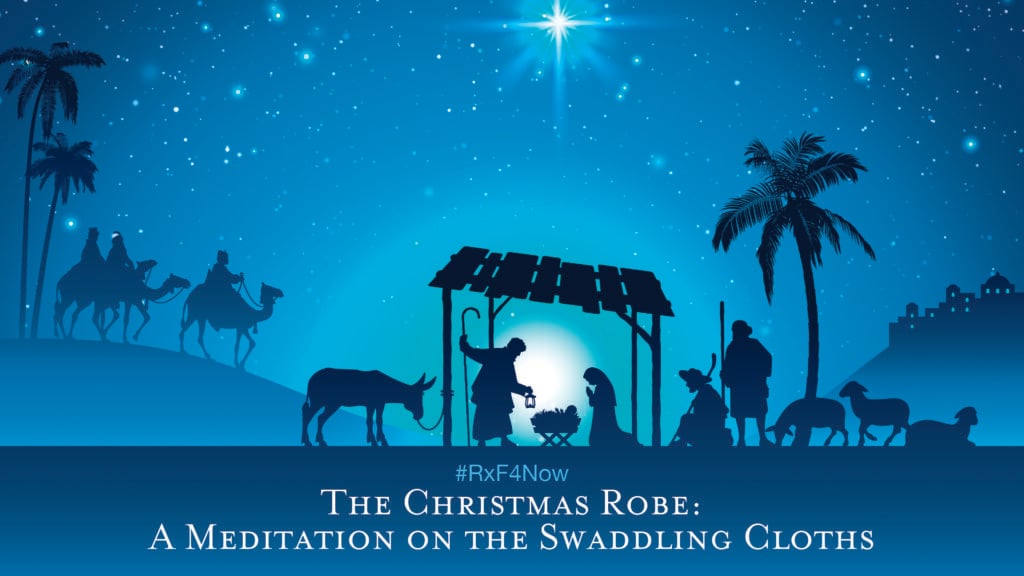
#RxF4Now—The Ogre by the Manger • Dwight K. Nelson
Connect Card
In the Bleak Midwinter • 126 sung to the tune of 224
As We Depart
Sinfonia (from Messiah) • George Frideric Handel


RxF4Now—The Ogre by the Manger

www.newperceptions.tv


  • Research
    • Eastern Tennessee State University research published in the American Journal of Public Health (reported in Los Angeles Times 11-18-16)
    • American Journal of Public Health (reported in Los Angeles Times 11-18-16)
    • The median household income in the poorest “state” was $ —while in the richest “state” it was $ .
    • The average number of people per county in the poorest “state” was about —compared with about   in the richest “state.”
    • Although the poorest “state” had a much smaller population, the ratio of people to primary care doctors was that of the richest “state.”
    • Smoking prevalence was as high in the poorest “state,” and the prevalence of obesity was %  higher.
    • Life expectancy for women in the poorest “state” was   years, compared to   years in the richest “state.” For men, life expectancy in the poorest “state” was   years and   in the richest “state.”
    • The proportion of the population that was African American was   times higher in the poorest “state” than in the richest one.
    • In the richest “state” %  of residents lived in rural areas—whereas in the poorest “state” %  of people did.
    • People in the poorest “state” were living under conditions seen in the real United States around 1975 or 1980—whereas people in the richest “state” were already living under conditions that won’t apply to the real United States until 2020 and beyond—i.e., “the poorest “state” is between   years behind the living conditions achieved by the wealthiest “state.”
    • Comparing these poorest and richest “states” with 222 actual countries of the world—if the richest “state” were an independent country it would rank 8th in the world for life expectancy for men, 25th for women—but the poorest “state” would rank 123rd for men and 116th for women—meaning more than   the countries in the world have longer life expectancy than the poorest counties in the United States.
  • Reflection
    • Mark 10:17-22
    • The Greek for “great wealth” (NIV) literally reads: “. . . because he had     .”
      • The average American home today contains   items—which would certainly qualify for “many possessions”!
    • According to Joshua Becker, the author of The More of Less: Finding the Life You Want Under Everything You Own, we see about   ads every day telling us to buy more.
    • As the Huffington Post suggested, the mantra to hook us third millennials seems to be: “Buy like you , only more frequently.”
    • “Joshua Fields Millburn & Ryan Nicodemus, known as ‘The Minimalists’ to their 4 million readers, help people live more meaningful lives with less through their website, books, podcast, and documentary.” (www.theminimalists.com)
      • Millburn: “How might your life be better with ?”
      • Millburn: “Consumption is not the problem.  consumption is the problem.”
    • Proverbs 30:15—“The leech has two daughters. ‘’   they cry.”
    • Julie Schor: “There is a widespread sense among the population that people have gotten too materialistic, and that's been around for a while. It’s also the case that materialism is the other person’s disease, so percent of people think that Americans are too materialistic.”(http://www.theatlantic.com/business/archive/2015/10/juliet-schor-american-dream/409321/)
    • Schor: “Economically privileged people can be very critical of the materialism of very poor people, because they have a large television or a pair of sneakers.”
    • Desire of Ages: “The story of Bethlehem is an exhaustless theme. In it is hidden ‘the depth of the riches both of the wisdom and knowledge of God.’ Romans 11:33. We marvel at the Saviour’s sacrifice in exchanging the throne of heaven for the manger, and the companionship of adoring angels for the beasts of the stall. Human pride and   stand rebuked in His presence.” (49)
      • The Ogre? There beside the manger human   stands rebuked.
    • Desire of Ages: “Selfishness is . . . . and the soul that refuses to impart will perish.” (417)
    • Self-surrender is most convincingly demonstrated by “  surrender.”
    • Jerry Bridges: “Contentment with what we have—whether it is possessions, or station in life, or mental and physical activities—is worth far, far more than all the things we don’t have. A multimillionaire reportedly was once asked how much money was enough, to which he replied, ‘One dollar more.’” (Transforming Grace 78)


Stuff

Offering for May 30, 2026

Pioneer Operating Budget

“We make a living by what we get, but we make a life by what we give.” – Winston Churchill

When the author of our reading became a member of the Seventh-day Adventist Church decades ago, a song, “Love is Something,” written by Malvina Reynolds, was sung during their Adventist Youth (AY) programs. This song was sung during the evening offering collection. The first verse went something like this: “Love is something if you give it away, give it away, give it away. Love is something if you give it away, you end up having more.”

The idea that love begets more love could not be truer. When we love like Jesus loves, the benefits are abundant. When we give like Jesus gives—without limitation—the blessings return in abundance, running over.

And we “won’t have enough room to take it in!” (Malachi 3:10, NLT). The Bible says in Acts 20:35, “Remembering the words the Lord Jesus himself said: ‘It is more blessed to give than to receive.’”

May the copious blessings of heaven be ours, as we give in love, gratitude, and without reservation to the cause of Christ in our local church today.

North American Division Stewardship Ministries

Widows and Widowers Picnic

WIDOWS and WIDOWERS are invited to potluck at Rangeline Park, 10138 Rangeline Rd, pavilion 2, in Berrien Springs at 1 PM on Sunday, June 7. Come with your favorite dish and suitable clothing for a boat ride afterwards! See you then! Caring Hearts Ministry

Wilson Retirement

Please join us in celebrating the retirement of Barry Wilson after 35 remarkable years of service with the fire department, including his dedicated tenure as liaison to Andrews University. A retirement party will be held in his honor on Sunday, May 31, 1:00 PM at the Berrien Springs Oranoko Fire Dept.

Something in Common Sabbath School

Join us for the “Love Like You Mean It” Series! Sessions will be held in the Pioneer Commons each Sabbath morning from 10:30 to 11:30. Everyone is welcome!

  • May 23: Session Seven - Love is Virtuous
  • May 30: Session Eight - Love is Honest
  • June 6: Session Nine - Love is Tenacious
  • June 13: Session Ten - Love Never Fails